具体查阅张道真语法指南。
虚拟语气是一种特殊的动词形式,用来表示说话人所说的话不是事实,而是一种假设、愿望、怀疑、建议、猜测、可能或纯粹的空想等,通常由 if 引导的状语从句与主句构成
一、五种基本句型
1、纯条件虚拟语气
(1) 句型
if + 主语 + 一般现在时动词,主语 + will/may/can/shall/must/ought to/should + 原型动词
If anyone lies, I will punish him. 假如有任何人说谎,我将会处罚他
If you make a mistake, you should admit it. 假如你犯了错,应该承认
(2) 表纯条件结构的副词连词不只 if 一种,once(一旦 = as soon as)、when(当)、unless(除非)等连词也可构成条件句,用法与 if 相同,即条件句使用一般现在时,主句使用一般将来时
Once/If you make a mistake, I will punish you. 如果你犯错了,我会处罚你
I won’t do it unless you help me. 除非你帮我,否则我不会做这件事
2、与现在事实相反的虚拟语气
If + 主语 + 一般过去时动词,主语 + would/could/might/ought to/should + 原型动词
注意,if 句子中若有 be 动词,一律为 were,而非 was
If I were rich, I would buy my parents a villa. 如果我有钱会买别墅给我父母(我现在没钱)
If I were the richest person in the world, I would buy a private island.
If I were the richest person in the world, I could solve many global problems.
If I were the richest person in the world, I might retire to a small village.
If he were here, I would see him. 他现在若是在这里,我就会去看他(他现在不在这里)
If I had a girlfriend, I would have a blind date.
3、与过去事实相反的虚拟语气
If + 主语 + had + 过去分词, 主语 + would/could/might/ought to/should + have + 过去分词
If he had been here yesterday, I would have seen him.如果昨天他在这儿,我就能看到他(他昨天不在这儿)
If he had taken my advice, he might not have made the mistake. 如果他肯听我的劝告,就不会犯这个错误了
If I had taken your advice last night, I would not have failed.
In point of fact, there might have been no Lolita at all had I not loved , one summer, a certain initial girl-child.
Without it, I could never have formed our plan, and for that, you will have your reward, Wormtail.
In any case, awkward questions would have been asked if she had gone back to the Ministry with the news that she had met you on her holidays.
If General Jackson hadn’t run the Creeks up the creek, Simon Finch would never have paddled up the Alabama
4、与将来状况相反的虚拟语气
使用本虚拟语气时, if 从句一定要加助动词 should, 译成“万一”
(1) 低可能性
If + 主语 + should + 原形动词, 主语 + would/could/might/ought to/should + 原型动词
The sky is blue. If it should rain, the picnic would be cancelled. 天空一片湛蓝,万一下雨,野餐将取消
If the earth should explode, I would spend all my money.
And if by chance an honest man like yourself should make enemies then they would become my enemies. And then, they would fear you.
(2) 高可能性
If + 主语 + should + 原形动词, 主语 + will/may/can/ought to/should + 原型动词
There are dark clouds in the sky. If it should rain, the picnic will be cancelled. 天空有乌云,万一下雨,野餐将取消
在条件从句中有时还可以用“were to+不定式”(a)或“should+不定
式”(b)这两种形式:
a. If he were (was) to resign, who would take his place?如果他要辞职,谁
来接替他?
If I were to do the job, I would do it in a different way.要是我来做这工作,
我会是另一种做法。
if a man were to walk into a bedroom with his wife and he’s feeling frisky and the wife sees it but she isn’t feeling frisky the headache generator will actually start pulsating.
b. If you should have any difficulty in getting the medicine,(you could) ring this number.如果你找这种药有困难,(你可以)拨打这个电话。
If the toys should arrive in a damaged condition, please inform us at once.
如果这些玩具运到时有损坏,请立即通知我们。
在后面这类句子中,主句的谓语有时可用祈使语气(见上例),或用陈述
语气:
If I should be free tomorrow, I will come to see you.如果明天我有空我会来看你的
5、与真理相反的虚拟语气
If + 主语 + were to + 原形动词, 主语 + would/could/might/ought to/should + 原型动词
If the sun were to rise in the west, the sunflower would be scared to death. 太阳从西方升起,向日葵会吓死
If the pig were to go up the tree, then you would be rich.
主从句时间不一致
If you had listened to me, you would pass your exam now.
从句过去,主句现在。
Where would we be if he hadn’t?
Where would we be[now], if he hadn’t[helped us then]?
从句过去,主句现在。
二、省略
虚拟语气结构中,从句、主句或连词 if 形式上可以省略,而并不影响意义表达
1、省略主句,表示愿望
If he were here! 假如他在这里该多好啊!
If I had never married. 如果我从未结婚就好了
If only you had told me the truth before. 要是你以前告诉我真相就好了
2、省略从句
You might stay here forever. 你可以永远待在这里(省略了 if you wanted 或类似条件)
That would be fine. 那就太好了(省略了 if you should do it 或类似条件)
I would not have done it. 我是不会做那件事的(省略了 if I were you 或类似条件)
3、省略 if
凡表虚拟语气的 if 从句中,若有过去完成时助动词 had,或表“万一”的助动词 should 或有 were 出现时,可将 had、should、were置于主语前,而将 if 省略
If I had known it, I would have told him. 如果我早知道的话,就会告诉他了
= Had I known it, I would have told him
If he should do it, I would punish him. 万一他做了这件事,我就会处罚他
= Should he do it , I would punish him
If I were you, I wouldn’t do it. 如果我是你,就不会做这件事
= Were I you, I wouldn’t do it
虚拟语气
具体查阅张道真语法指南。
5、倒装: 当从句的谓语动词含有were,should,had时,if可以省略,这时从句要用倒装语序,即把were,should,had等词置于句首,这种多用于书面语。eg1:
Were I Tom, I would refuse. = If I were Tom, I would refuse.
如果我是汤姆,我会拒绝。
Should it be necessary, I would go.
假若有必要,我会去的。
Had it not been for the bad weather we would have arrived on time.
若不是天气坏,我们就准时到达了。
Should he agree to go there, we would send him there.
要是他答应去的话,我们就派他去了。
Were she here, she would agree with us.
如果她在这儿的话,她会同意我们的。
Had he learnt about computers, we would have hired him to work here.
如果他懂一些电脑知识的话,我们已经聘用他来这里工作了。
【注】
① 若条件从句为否定句,否定词not应置于主语之后,而不能与were,should,had 等缩略成Weren’t,Shouldn’t,Hadn’t而置于句首。
② 有时省略if后提前的had不是助动词:
Had I time, I would come. 假若我有时间,我会来的。(=If I had time…)Link to original Footnotes
三、不同引导词的状语从句
if 引导状语从句,从句中的谓语动词常用虚拟语气。if 还可由其他连词取代
If/Provided/Providing/supposing/As long as it is fine, we will go picnicking. 如果天气好,我们就去野餐
= We will go picnicking on condition that it is fine.
I’ll keep a T-shirt for you in case you should change your mind. 我给你留一件T恤,说不定你会改变主意
I live so that others may live better. 我活着是为了让别人活得更好
I won’t let you in whoever you may be. 不管你是谁,我都不会让你进去
However hard the task may be, I must fulfill it on time. 不管任务多么艰巨,我都必须按时完成
as if 引导状语从句
as if 或 as though(仿佛) 均为副词连词,引导状语从句,使用时有三种时态:
(1) 表极大的可能:动词使用一般时态
I looks as if/as though it is going to rain. 现在看起来好像要下雨了
(2) 表与现在事实相反:动词使用一般过去时
He loves me as if/as though I were his own child. 他爱我就像我是他的孩子一样
(3) 表与过去事实相反:动词使用过去完成时
He looks as if/as though nothing had happened. 他看起来就像是什么事都不曾发生过
(4) 表即将发生的状态:接不定式
She opened her lips as if (she was going) to speak. 她张开双唇,好像有话要说
四、特定情况下的宾语从句
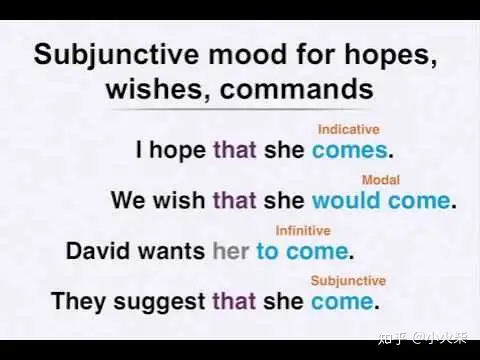
虚拟语气主要用于条件句(即状语从句),也可用于特定情况下的宾语从句
1、wish 后接宾语从句
在动词 wish 后的宾语从句(常常省略 that),表示不可实现的愿望
(1) 若和现在事实相反,要采用一般过去时
I wish/I would rather/Would/If only he were here. 我真希望他在这里(他不在)
(2) 与过去事实相反,使用过去完成时
I wish he has been here yesterday. 我真希望他昨天在这里(他昨天不在)
(3) 动词 wish 如果是过去式,后面宾语从句的动词的虚拟语气形式不变
She wished she knew how to play golf. 她希望自己会打高尔夫球
I wished I hadn’t been to forgetful. 我要是不这样健忘该多好
(4) 有时在宾语从句中可用 would/might 加动词原型,表示有可能实现的愿望
I wish he might live with me. 我希望他和我住在一起
He wishes I would go with him. 他希望我和他一起去
I wish you would be quiet. 我希望你安静一点
2、hope后接宾语从句
hope 也表希望,但之后接 that 从句时,使用一般时态表极大的可能
(1) 表现在状况
I hope he is here. 我希望他现在在这里(他极有可能在这里)
(2) 表将来状况
I hope he will come. 我希望他会来(他极有可能会来)
(3) 表进行状况
I hope they are doing it. 我希望他们正在做这件事(他们极有可能正在做这件事)
(4) 表完成状况
I hope they have done it. 我希望他们把这件事做完了(他们极有可能做完了)
(5) 祈使句
I hope 接 that 从句时,从句中可使用助动词 may,形成祈使句
I hope he may live long. 愿他长命百岁 = May he live long
I hope God may bless you. 愿上帝保佑你 = May God bless you
3、意志动词 后接宾语从句
意志动词有“建议”、“要求”、“命令”、“规定”等四大类,之后用 that 从句作宾语时, that 从句中要使用助动词 should。而 should 往往可以省略
(1) 建议: suggest 、recommend 、advise 、urge(呼吁)、propose、move(提议)
(2) 要求:ask、desire、demand、require、request、insist(坚持要求)
(3) 命令:order、command
(4) 规定:rule、maintain
They suggested that he (should) come back on time. 他们建议他准时回来
Mary desired that Peter (should) treat her nicely. 玛丽要求彼得好好待她
The umpire ordered that the player (should) be ousted. 裁判命令选手出场
The principal ruled that no student (should) play truant. 校长规定学生不准逃学
that 从句若是置于意志动词变成的名词之后,而与该名词形成同位语时, that 从句中也要使用助动词 should。而 should 往往可以省略
It is my suggestion that he (should) study abroad. 我建议他出国读书
They raised a proposal that the meeting (should) be postponed. 他们提议延期开会
It’s John’s desire that someone (should) help him write the letter. 约翰要求别人帮他写信
Dwight D.Eisenhower issued identical notes to these governments proposing that a treaty be concluded to ensure a lasting free and peaceful status for the continent.
She proposed that the book be banned.
五、其他用法
1、“It’s necessary that”后接主语从句
在 It’s necessary that 这类的主语从句中, 从句使用 should + 动词原形,而 should 往往予以省略
此类形容词常用的有 :necessary、important、essential、imperative、urgent、desirable、recommendable、advisable、nature、strange、impossible、possible 等
It’s necessary that he (should) work hard. 他必须努力工作
I think it’s essential that he (should) finish it before leaving. 我认为他须在离开前做完这件事
It’s desirable that he (should) not be lazy again. 他一定不能再懒惰了
2、“It’s time that” 后接定语从句
It’s time/about time/high time + that 从句的一般过去时 该是…的时候了
It’s time that he went to bed. 该是他上床睡觉的时候了
It’s about time we were off. 该是我们走的时候了
It’s time we summed up our results. 我们该总结我们的成绩了